
Grey mould (botrytis) and flower rot
A fungus that rots dense flowers from the inside in humid, still air. Cut it out well past the damage and drop the humidity straight away.
Symptoms
- A single leaf yellowing and wilting out of a flower is often the first clue.
- Brown, mushy or soft spots inside dense flowers.
- Grey, fuzzy mould that releases a cloud of spores when disturbed.
- A damp, musty smell.
Quick checks
How to fix it
- 1Physical
Cut it out carefully
Cut out affected parts well beyond the visible damage, bag them inside the tent without shaking, and remove them. Clean your snips afterwards.
- 2Environment
Drop humidity and keep air moving
Lower humidity to the chart's late-flower range (40–50%), increase extraction and keep air moving through the canopy, including at night. Avoid big temperature drops at lights-off.
- 3Prevention
Thin and tidy
Remove dead leaves and debris, thin crowded areas and keep plants spaced.
- 4Safe treatment
No sprays on flowers
RHS notes there are no fungicides approved for gardeners against grey mould, so rely on removal, hygiene and climate.
Likely causes
- Humidity too high for late flower, especially at night.
- Still air inside a dense canopy.
- Big temperature drops at lights-off, causing condensation.
- Damage from caterpillars or broken stems letting the fungus in.
- Dead leaves and debris left in the tent.
What to avoid
- Don't spray anything onto flowers, including foliar feeds like Monkey Mist.
- Don't shake infected material around the tent.
- Don't leave damaged material in place 'to see what happens'.
- Don't let humidity creep up overnight.
Prevention
- Follow the chart's falling humidity in flower (down to 40–45% by week 8).
- Good airflow and spacing.
- Keep moths out with intake mesh.
- Clear debris and dead leaves regularly.
Monkey products that can help
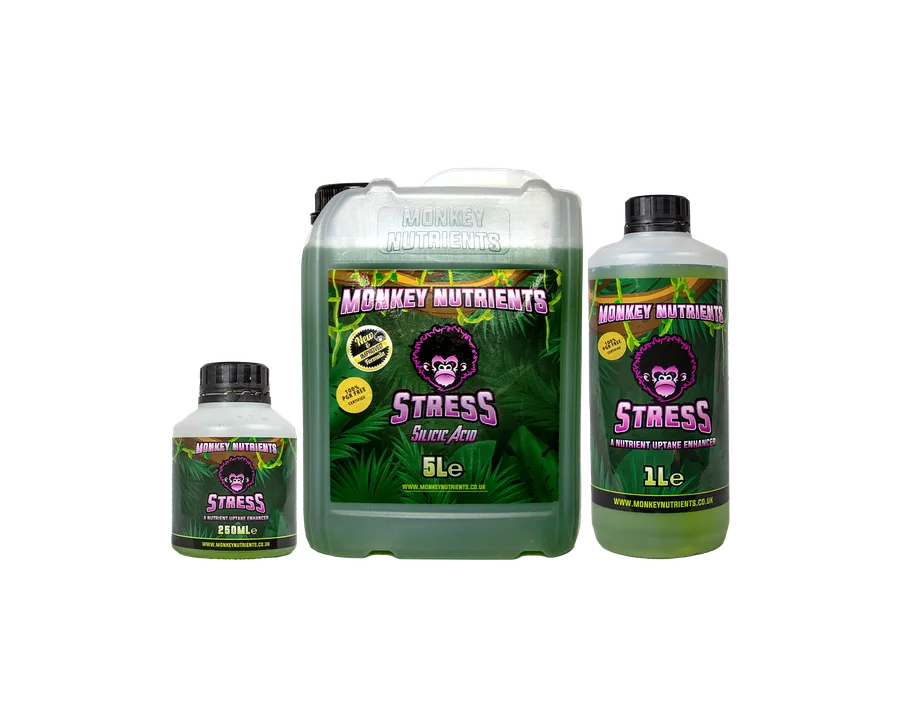
Stress
Silicon is known to strengthen cell walls and plays a role in the plant's defence responses; it can help, but won't save rotting flowers.
2 ml per 10 L every week. Always add it to the water first and mix thoroughly before adding anything else.
View product →Products support a healthy plant. They don't replace fixing the cause.
When to get help
If rot appears in several flowers or keeps coming back after you've corrected humidity, email info@monkeynutrients.co.uk with photos.
Email info@monkeynutrients.co.ukRelated problems
Sources
Advice is general guidance from Monkey Nutrients and UK horticultural sources. Always read product labels.