
Aphids (greenfly and blackfly)
Soft, sap-sucking insects that cluster on new shoots and under leaves, leaving sticky honeydew. Squash early colonies and bring in natural enemies.
Symptoms
- Clusters of soft, round insects (green, black, grey or pink) on shoot tips and leaf undersides.
- Sticky honeydew on leaves, sometimes with black sooty mould growing on it.
- Curled, distorted new growth.
- White cast skins on the leaves below a colony; ants walking up the stems.
Quick checks
How to fix it
- 1Prevention
Feed to the chart
Avoid overfeeding, especially nitrogen, as soft growth is an aphid magnet.
- 2Physical
Squash or rinse early colonies
Rub out small groups between finger and thumb, or rinse them off with water. Remove badly affected shoots and bag them.
- 3Biological
Natural enemies
Release parasitic wasps (Aphidius colemani suits many common aphids; use a mixed parasitoid product if unsure which aphid you have), ladybird larvae or lacewing larvae. The predatory midge Aphidoletes aphidimyza works best once aphids are present and needs long days (about 15 hours or more of light), so it suits the growth stage.
- 4Safe treatment
Safe sprays in the growth stage only
Use an insecticidal soap or plant-oil spray approved for amateur use in the UK, in the growth stage or very early flower, covering the undersides. Repeat as the label says.
- 5Support
Help the plant recover
Keep Stress in the feed, and use Monkey Mist in growth and early flower to help the plant bounce back once the aphids are under control.
Likely causes
- Aphids carried in on new plants or clothing, or winged aphids flying in through open vents.
- Lush, soft growth, often from too much nitrogen.
- No natural enemies in an indoor space.
What to avoid
- Don't overfeed nitrogen.
- Don't spray flowers in mid to late flower.
- Don't spray while biological controls are working, unless the label says it's compatible.
Prevention
- Quarantine new plants and check new growth weekly.
- Intake mesh and a zipped tent.
- Feed at chart strength.
Monkey products that can help
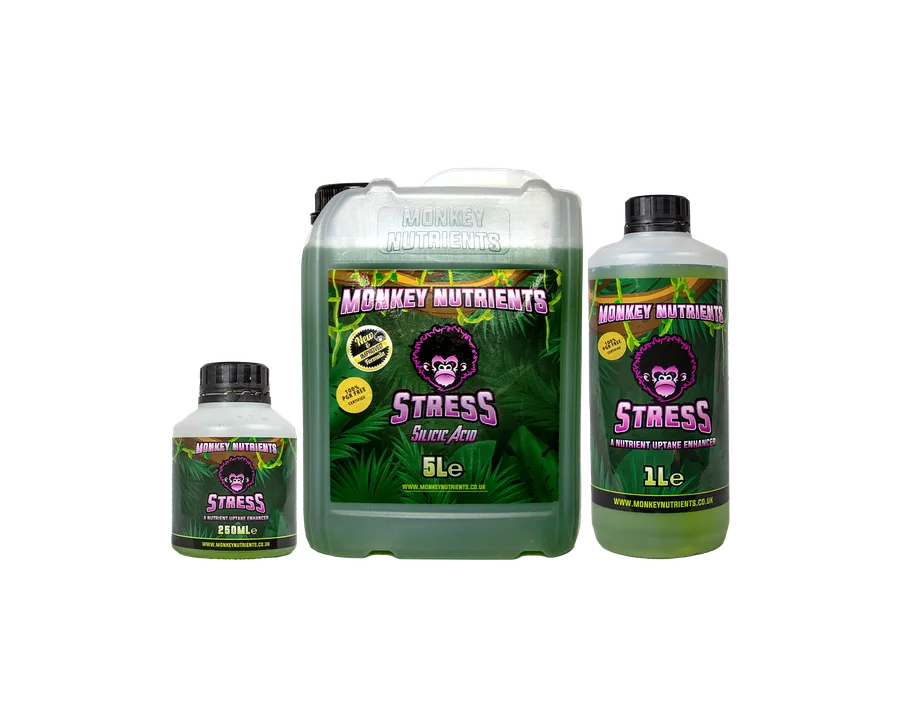
Stress
Can help strengthen cell walls, making the plant tougher for sap- and leaf-feeding pests. Support only, not a cure.
2 ml per 10 L every week. Always add it to the water first and mix thoroughly before adding anything else.
View product →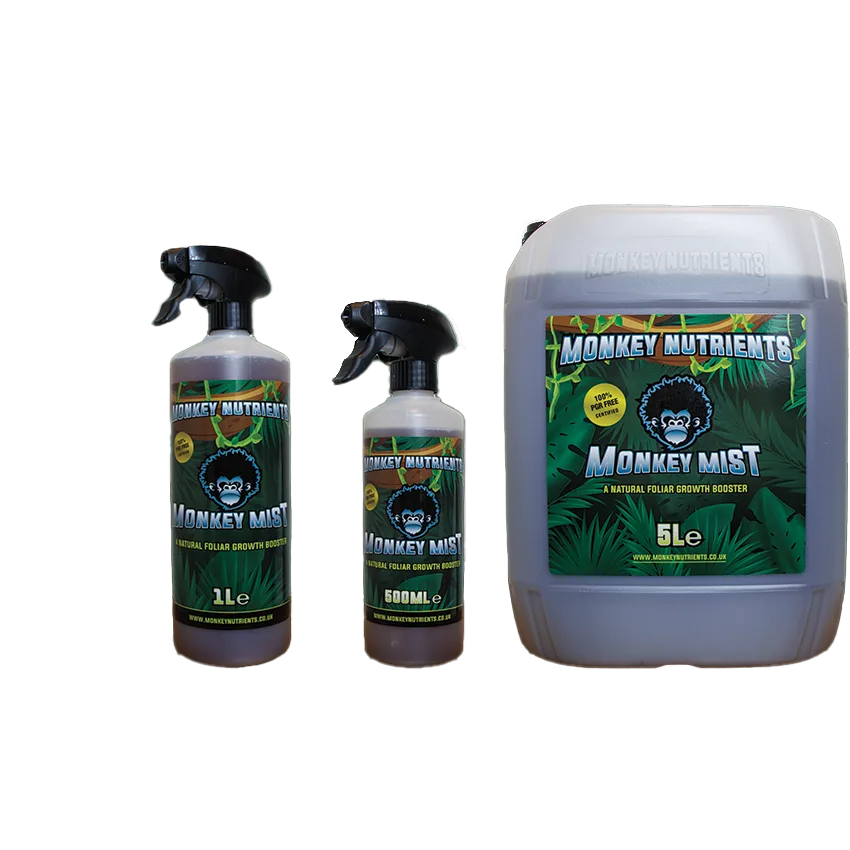
Monkey Mist
Monkey say it helps plants bounce back from pest pressure. It is a foliar feed, not a pest control.
Ready to use, no mixing. Mist evenly over the tops of the leaves in propagation, growth and early flower only. Safe with the lights on. Never spray maturing flowers.
View product →Products support a healthy plant. They don't replace fixing the cause.
When to get help
If colonies keep returning after two to three weeks of predators, or new growth is badly distorted, contact your biological control supplier or email info@monkeynutrients.co.uk with photos.
Email info@monkeynutrients.co.ukRelated problems
Sources
Advice is general guidance from Monkey Nutrients and UK horticultural sources. Always read product labels.