
Root aphids
Aphids that feed on roots, so they're easy to miss and often mistaken for a deficiency or watering problem. You have to look at the roots.
Symptoms
- Wilting, stunting and pale or discoloured leaves that don't respond to feeding or watering changes.
- Small (2–3 mm) yellow, green or brown aphids on the roots, often with white, waxy secretions.
- Winged aphids on sticky traps near the medium, or ants in the container.
Quick checks
How to fix it
- 1Prevention
Check roots before anything goes in
Inspect the roots of new plants or cuttings before potting on, and use fresh medium.
- 2Environment
Reduce stress
Keep the plant evenly watered and fed to the chart; RHS notes good care reduces the stress root aphids cause.
- 3Physical
Wash and repot small plants
For young plants, wash the old medium off the roots and repot into fresh medium. Some aphids may survive, so keep checking.
- 4Biological
Root-zone predators (results vary)
Ground-dwelling predatory mites (Stratiolaelaps / Hypoaspis) feed on a range of small, soft-bodied prey in the medium and some growers use them as part of a root-zone programme. Root aphids are hard to control, so treat this as support, not a guaranteed fix.
- 5Safe treatment
Remove badly affected plants
If a plant is heavily infested, remove it with its medium in a sealed bag and clean the area, so the aphids don't spread to others.
Likely causes
- Root aphids brought in on plants, cuttings or used medium.
- Ants carrying aphids between containers.
- Drought stress making the damage worse.
What to avoid
- Don't keep adding feed to fix 'deficiency' symptoms without checking roots.
- Don't reuse medium from an infested plant.
- Don't let containers dry out hard, which makes root aphid damage worse.
Prevention
- Fresh medium every run.
- Quarantine and root-check new plants.
- Yellow sticky traps near the medium to spot winged adults.
Monkey products that can help
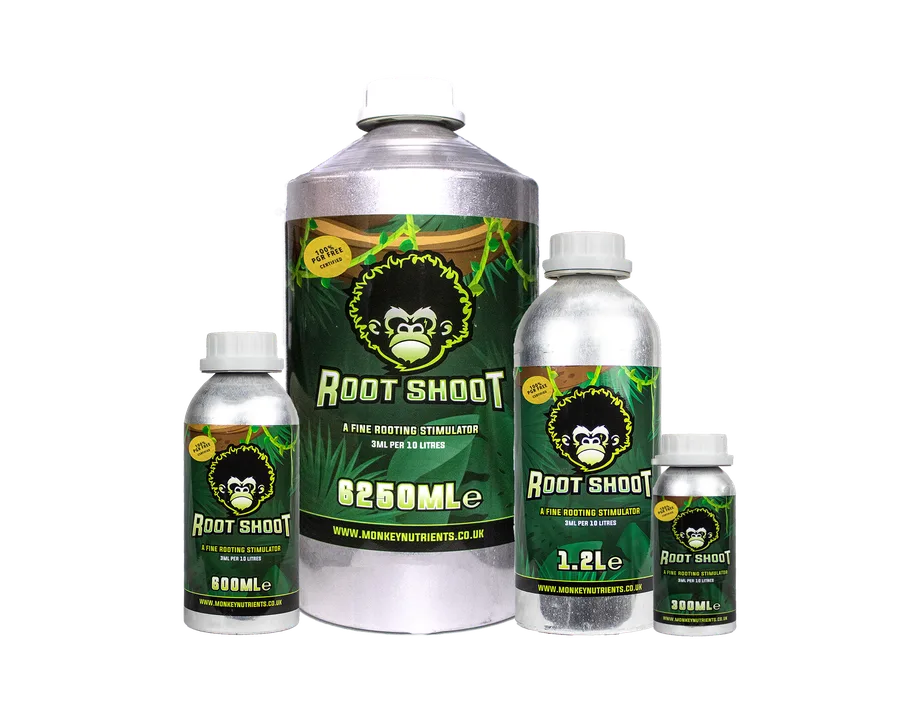
Root Shoot
Designed to build root mass and support a healthy root zone while the plant recovers.
Follow the feed chart: 2 ml per 10 L in growth weeks 1–2, then 3 ml per 10 L from growth week 3 to flower week 5.
View product →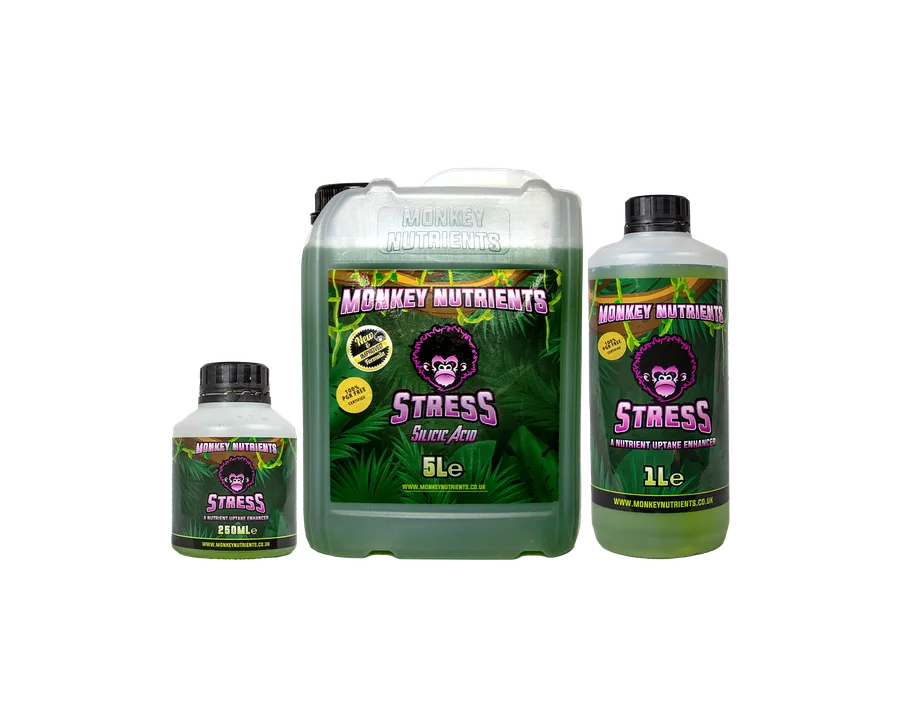
Stress
Monkey say silicon helps the plant manage stress; it can help the plant cope while you deal with the cause.
2 ml per 10 L every week. Always add it to the water first and mix thoroughly before adding anything else.
View product →Products support a healthy plant. They don't replace fixing the cause.
When to get help
If you find root aphids on several plants, or a plant keeps declining after repotting, email info@monkeynutrients.co.uk with photos of the roots, or ask a biological control supplier.
Email info@monkeynutrients.co.ukRelated problems
Sources
Advice is general guidance from Monkey Nutrients and UK horticultural sources. Always read product labels.