
Phosphorus deficiency
Dark, dull or bluish leaves, purple-red stems and slow flower development, often worse when roots are cold or pH is high.
Symptoms
- Dark, dull or bluish-green leaves.
- Purple-red stems and leaf stalks (some plants have purple stems naturally, so look for change).
- Slow flower development.
Quick checks
How to fix it
- 1Environment
Warm the root zone
Lift containers off cold floors and keep nights within about 5–8 °C of the daytime temperature.
- 2Check
Correct pH
Check the basics first: feed and run-off pH (5.5–6.5), EC for this week, watering, climate and light.
- 3Feed
Follow the flowering chart
Bloom A+B at chart strength, plus your chosen PK 9/18 or Resin programme.
Likely causes
- Cold roots (below about 15 °C).
- pH too high, which locks phosphorus up.
- Feed too weak for the stage.
What to avoid
- Don't add more feed if the roots are cold: fix the temperature first.
- Don't assume all purple stems are a problem.
Prevention
- Insulate containers from cold floors in UK winters.
- pH in range.
Monkey products that can help
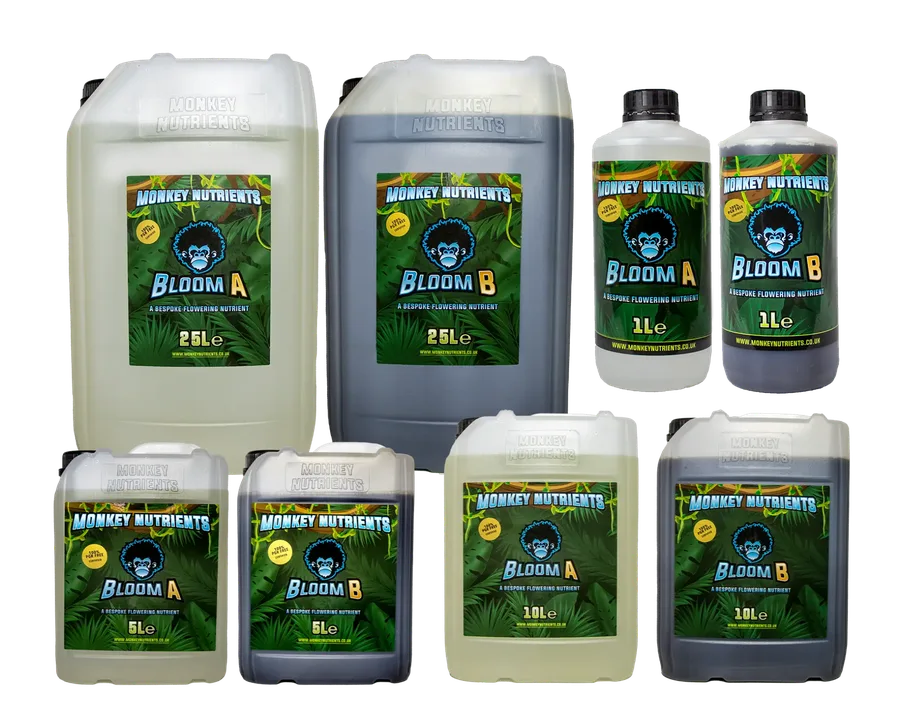
Bloom A+B
Flowering base feed with phosphorus and potassium raised for flowers.
Follow the flowering chart for the week: equal amounts of Part A and Part B, added separately and never mixed together neat.
View product →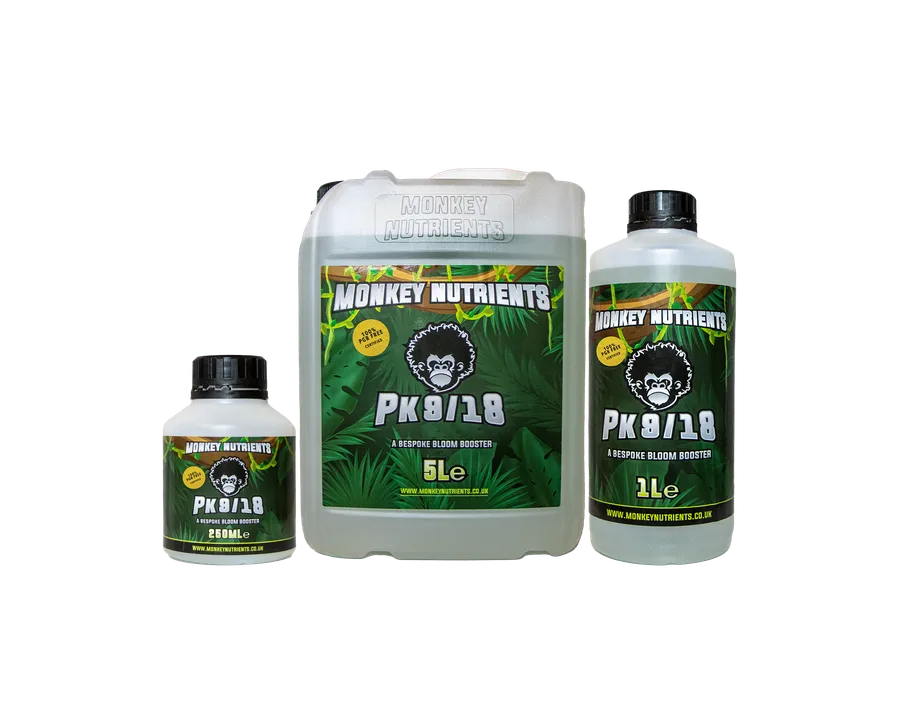
PK 9/18
Phosphorus and potassium supplement for the PK programme. PK 9/18 or Resin, never both.
Follow the PK chart (flower weeks 4–6). Use PK 9/18 OR Resin, never both.
View product →Products support a healthy plant. They don't replace fixing the cause.
When to get help
If symptoms persist with warm roots and correct pH, email info@monkeynutrients.co.uk with your readings.
Email info@monkeynutrients.co.ukRelated problems
Sources
Advice is general guidance from Monkey Nutrients and UK horticultural sources. Always read product labels.