
Thrips
Slim, fast insects that rasp leaves, leaving silvery streaks and black dots. They pupate in the growing medium, so treat leaves and medium together.
Symptoms
- Silvery, shiny streaks and patches on leaves, often near the veins.
- Tiny black dots (droppings) on the silvery areas.
- Slim, fast-moving yellow, brown or black insects 1–2 mm long; pale larvae on leaves.
- Distorted or stunted new growth in heavier attacks.
Quick checks
How to fix it
- 1Prevention
Screen and clean
Fit fine mesh over intakes, keep the tent zipped and clear dropped leaves and spilt medium. Don't bring cut flowers or houseplants into the grow space.
- 2Physical
Trap and remove
Hang blue sticky traps at canopy height to monitor and reduce adults. Remove badly damaged leaves and bag them.
- 3Biological
Predators on the leaves and in the medium
Release predatory mites (Amblyseius cucumeris or A. swirskii) onto the leaves, or the predatory bug Orius laevigatus. Add ground-dwelling predatory mites (Stratiolaelaps / Hypoaspis, or Macrocheles robustulus) or Steinernema feltiae nematodes to the medium to catch the pupae. Release early, before numbers build.
- 4Safe treatment
Safe sprays in the growth stage only
Use an insecticidal soap or plant-oil spray approved for amateur use in the UK, in the growth stage or very early flower. Cover all leaf surfaces and repeat as the label says; one spray won't catch the next hatch.
- 5Support
Help the plant recover
Keep Stress in the feed every week. Once thrips are under control, Monkey Mist can help the plant bounce back from pest pressure in growth and early flower.
Likely causes
- Thrips brought in on new plants, cut flowers or houseplants, or blowing in through unscreened intakes.
- Warm conditions, which speed up their life cycle.
- Pupae surviving in the growing medium, or in debris from a previous run.
What to avoid
- Don't spray flowers in mid to late flower.
- Don't use yellow traps alone if you've released flying predators, as traps catch beneficials too.
- Don't reuse old medium from an infested run without treating or replacing it.
Prevention
- Quarantine and inspect new plants for silvering before they go in the tent.
- Blue sticky traps as an early warning.
- Intake mesh and a clean, debris-free floor.
- Fresh or treated medium each run.
Monkey products that can help
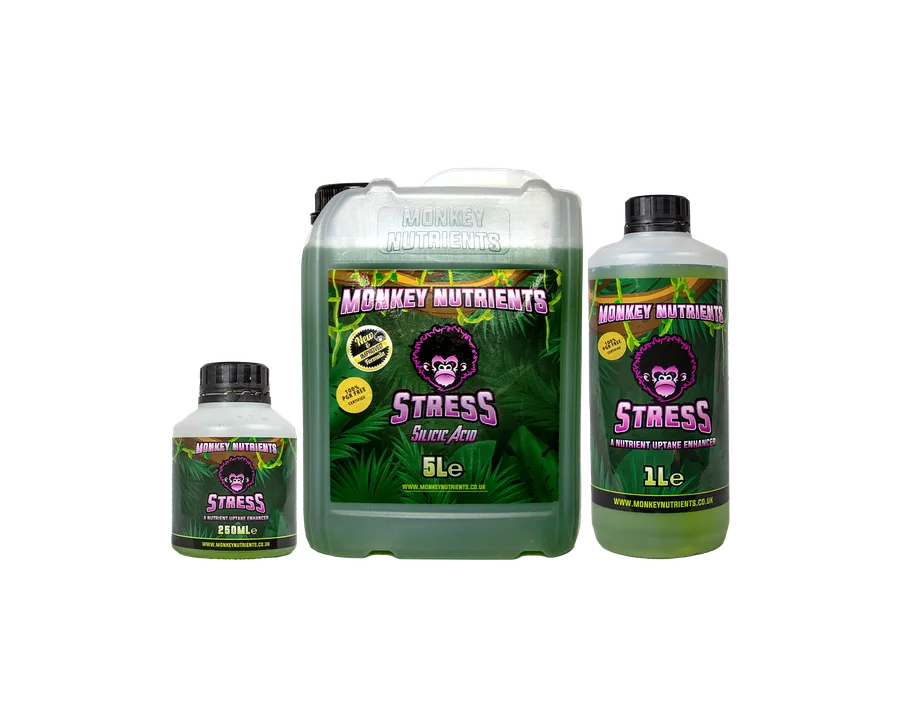
Stress
Can help strengthen cell walls so leaf-feeding pests find the plant harder going. Use it as support, not as a treatment.
2 ml per 10 L every week. Always add it to the water first and mix thoroughly before adding anything else.
View product →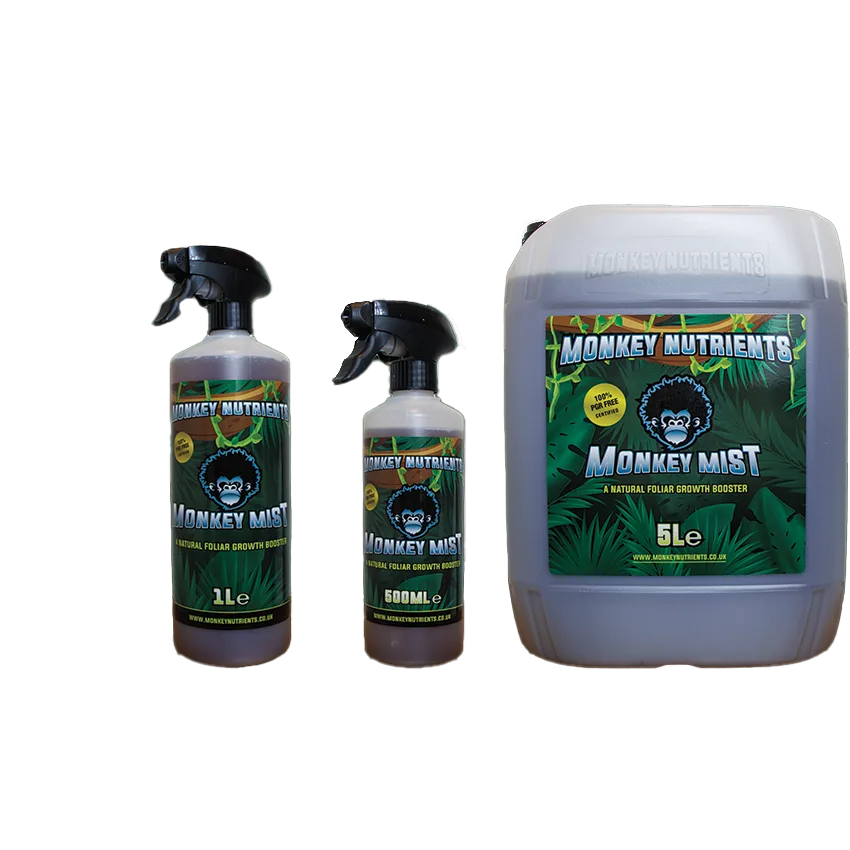
Monkey Mist
Monkey say it helps plants bounce back from pest pressure. It is a foliar feed, not a pest control.
Ready to use, no mixing. Mist evenly over the tops of the leaves in propagation, growth and early flower only. Safe with the lights on. Never spray maturing flowers.
View product →Products support a healthy plant. They don't replace fixing the cause.
When to get help
If silvering spreads to new growth after two to three weeks of predators and traps, contact your biological control supplier, or email info@monkeynutrients.co.uk with photos.
Email info@monkeynutrients.co.ukRelated problems
Sources
- RHS: Thrips
- AHDB: IPM strategies to control thrips in protected ornamental crops
- UConn Extension IPM: Managing western flower thrips on greenhouse crops
- RHS: Mail-order suppliers of biological controls (PDF)
- HSE: Using pesticides in your garden, home or allotment
- Monkey Nutrients Growing Guide (2026), Part 2: Spotting & fixing problems
Advice is general guidance from Monkey Nutrients and UK horticultural sources. Always read product labels.